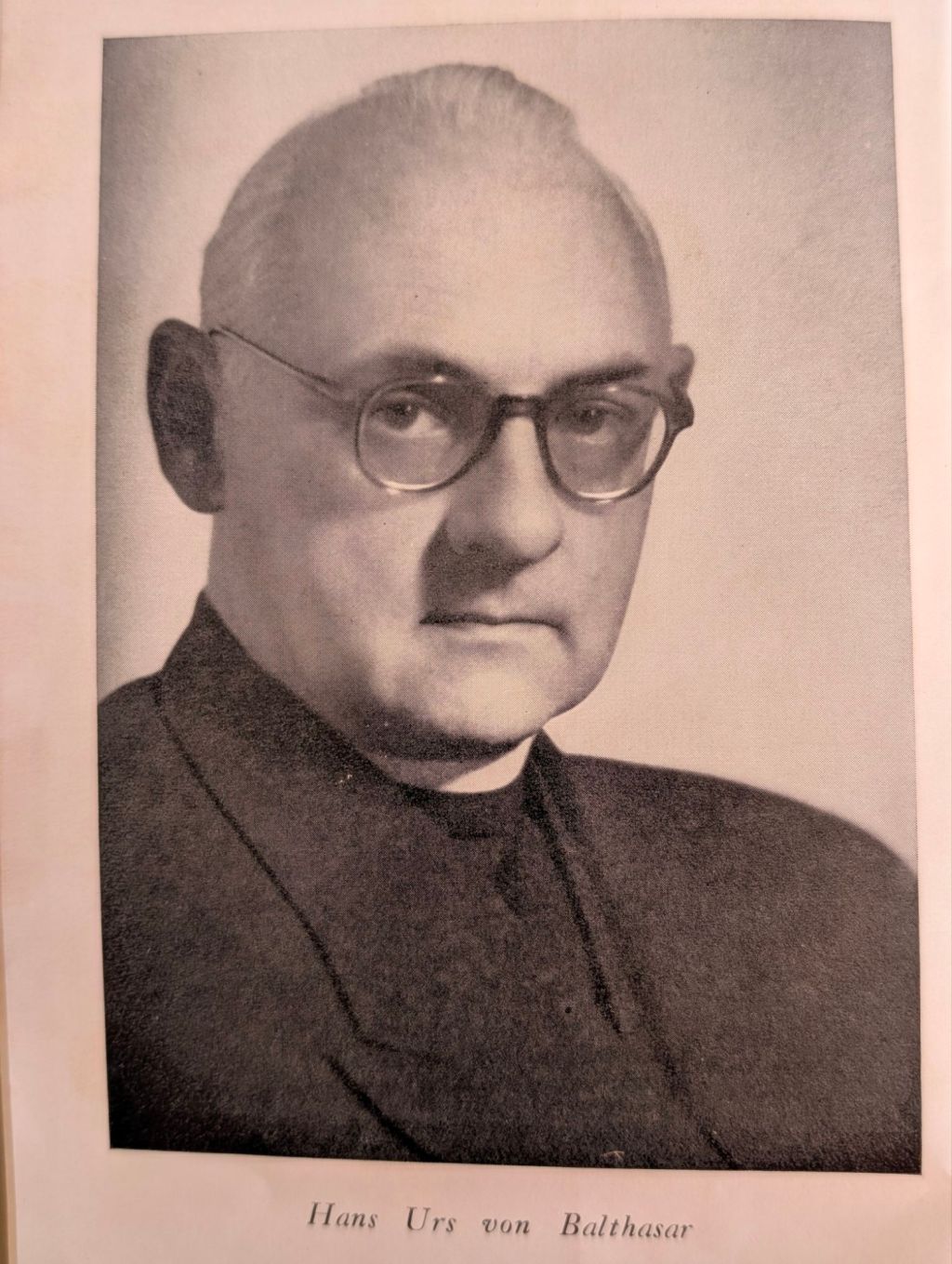
Hans Urs von Balthasar is, without a doubt, one of my favorite theologians. Although his vast body of work may seem dense and intimidating to a layperson, its paradox lies in the simplicity of its central message: the love of God is like a «jungle» — a beautiful expression he uses to describe something so immense that it is impossible to fully comprehend, especially for someone who, like me, feels lacking in great theological studies.
One of the themes that touches me most is that of “Holy Saturday.” Balthasar describes the moment when Jesus, in the absolute silence of death, descends into the depths of Hell to rescue the condemned. This image taught me something profound: often, God’s apparent inaction in the world is, in reality, a silent transformation occurring in the innermost recesses of the human soul.
Finding his work translated into Portuguese is not an easy task, but persistence led me to discover recommended texts for those who, like me, are looking for a gateway into theology.
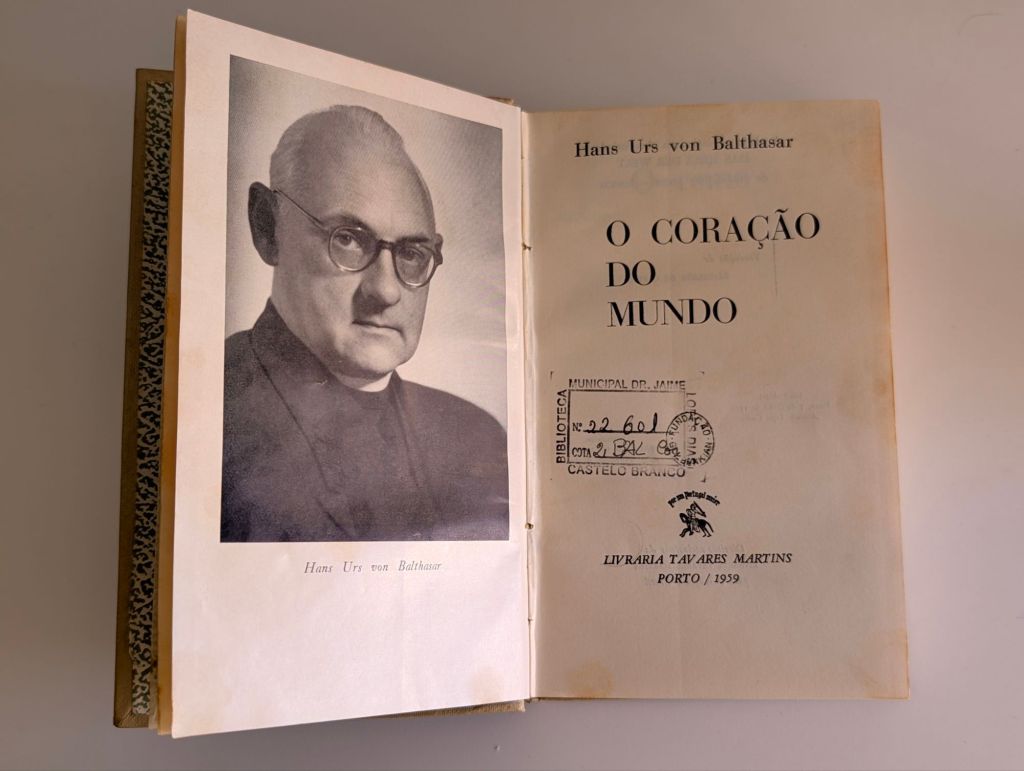
Recently, upon moving to a new city, I decided to explore the local library. Among the shelves in the Theology section, an old yellow book caught my eye: «The Heart of the World» (O Coração do Mundo), a 1959 edition. In that moment, I felt it was not chance, but an invisible guide that led me there. The reading revealed a deeply human sensibility, as illustrated by this excerpt:
“There is nothing tragic in us, because every renunciation is magnificently rewarded, and, the closer we approach the immaculate center of destitute poverty, the more intimately we take possession of ourselves, the greater certainty we have of possessing all things.” P. 20-21
These words offer an unshakable hope for those who feel their lives have fallen apart. Faced with the shards of the past, the inevitable question arises: when nothing remains to us, what truly remains?
What remains is the totality of who we are. The totality of what we have lived. The strength to build again, to move forward. Love. The values we never renounce. Our individuality. And hope, especially the hope for a new tomorrow.
Balthasar reflects on the chains we forge and our tendency to flee from God. It is tempting to raise walls and claim He does not exist, or to ignore Him because His demands seem too heavy. It is often easier to judge the failings of the institution than to look within ourselves.
True faith goes beyond the fulfillment of rituals or a “debt” paid on Sundays. The author clarifies the purpose of our existence in a stark way:
«To recognize and prove that we are not God.»
For Balthasar, death is the guarantee of new life. Just as autumn prepares for spring, we die and are resurrected in God when we allow His love to transform us. However, our relationship with this surrender is often selfish:
“When the bread is distributed to them in the desert, they foolishly think they have discovered its owner and run after him, like a flock of goats on the mountain, smelling of salt and sweat; he will have to flee and hide, to free himself from such persecution. But the shepherds have already awakened and are suspicious, with ear cocked: they have scented the number one enemy, and will not rest until they see him succumb under deadly blows.” P – 69
I see myself in this passage when I think about my own conversion. In despair, I sought God, hoping the storms would cease immediately. I acted like the crowd that followed Jesus only for immediate relief, ready to discard Him as soon as the affliction passed. I was profoundly mistaken about what it means to follow this path.
The “shepherds” (the Pharisees) felt threatened because Jesus was the mirror that revealed their shadows. In the world today, the path of power and immediate gratification remains more seductive. It is easy to question God’s presence in the face of the world’s atrocities, but Balthasar’s answer is luminous:
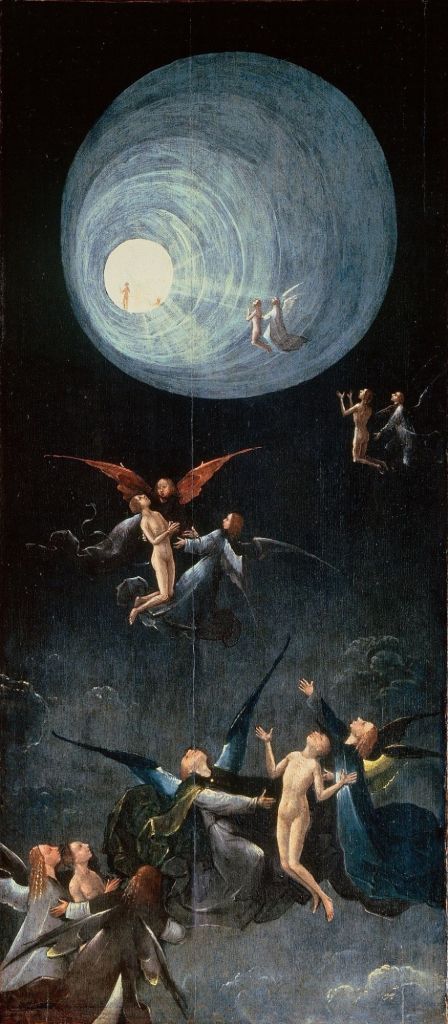
The Kingdom of God begins within us, in small choices. If God were to intervene authoritatively, He would nullify the free will that defines us. Even today, many yearn for a triumphant Messiah who annihilates what displeases us, forgetting that evil already does enough to corrupt the world.
The Kingdom of God, as Jesus explained to us, must begin in us. In the small things and actions of everyday life. What God would ours be if He interfered, limited our free will, or took sides, seeing that we are all part of Him? Do we still want a triumphant Messiah who annihilates cities and populations that do not align with our ideals and values? The evil that corrupts this world is enough for that. With leaders killing children, decimating cities, and imposing their doctrine on others.
“The heart became spirit, and from that spirit the new world was born. A great murmur filled the house. Doors and windows, the eyes and ears opened. An inner force broke the armor, and the face was revealed. The love of the heart loved unto annihilation, and, in becoming invisible in itself, it resurrected in the hearts of the redeemed.” P. 80
When we question divine “inactivity,” we forget the countless souls saved daily by the breath of hope. How many silent tragedies are averted by a spark of love igniting in an exhausted heart?
God’s action is a free gift, without hesitation. It is a love that holds no grudge for our denials or our forgetfulness in times of prosperity.
Ultimately, Balthasar invites us to find the sacred at the center of our fragility. By recognizing that we are not the center of the universe, we become capable of possessing the “all” through surrender. In the silence of our own “Holy Saturday,” it is love that reconstructs us and allows us, finally, to see the light of a new tomorrow.
 Via Bruni Michaelis – Catholicism, Fashion & Everyday Life
Leave a comment